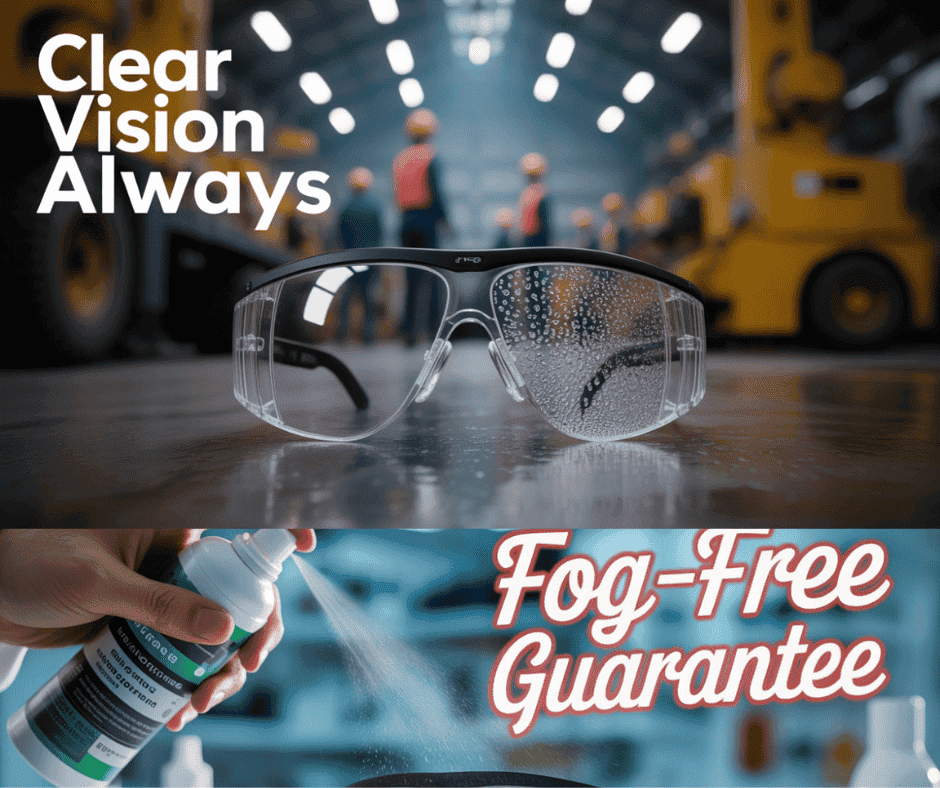
Fogging of safety glasses is a common and frustrating problem faced by professionals across various industries, including construction, manufacturing, healthcare, and laboratory work.
When safety glasses fog up, they block clear vision, posing significant risks in environments where eye protection is essential to prevent injury.
This issue can impair concentration, reduce productivity, and even lead to accidents because of reduced visibility. Addressing fogging safety glasses is critical to maintaining safety and efficiency on the job.
In many workplaces, employees rely on safety glasses to shield their eyes from flying debris, chemicals, or infectious materials.
However, temperature changes, humidity, and physical exertion can cause condensation to form on lens surfaces, creating fog.
For workers who need to perform precise manoeuvres or monitor intricate processes, fogged lenses can be hazardous.
It is no wonder many seek effective ways to keep their safety glasses clear while working.
By understanding why fogging occurs and how to prevent it, users can improve their workplace safety. Several practical techniques and products are designed to combat fogging, from anti-fog sprays and wipes to glasses with built-in coatings. Adjusting the fit and improving ventilation around the work area also help reduce fog buildup.
Fog-free glasses not only improve visibility and safety, but also boost worker comfort and confidence.
Employees who can trust their protective eyewear are more likely to comply with safety regulations and less likely to be distracted or frustrated. Ongoing advancements in eyewear technology continue to provide better solutions, making fogging less of an inevitable nuisance.
How to Keep Safety Glasses From Fogging Up
Keeping safety glasses from fogging up is essential for anyone who relies on protective eyewear in their daily work. Fogging occurs when moisture from the wearer’s breath, sweat, or ambient humidity condenses on the cooler lens surface, impairing vision and increasing accident risk.
To prevent fogging effectively, combine several strategies that address moisture management, airflow, and lens treatments.
One of the most popular methods for reducing fog is using anti-fog sprays or wipes. These products create a thin, transparent film on the lens surface that repels moisture and interrupts condensation.
Many industrial suppliers and online retailers offer formulas specifically designed for safety glasses, goggles, and face shields.
Applying these treatments regularly, according to the manufacturer’s instructions, helps maintain fog-free performance and makes cleaning easier.
Another vital step is to adjust the fit of the safety glasses to optimize airflow. Poorly fitting eyewear traps warm air close to the lens surface, creating an environment conducive to fog formation.
By ensuring the glasses sit snugly yet comfortably on the nose and temples, and by selecting styles with ventilation features, users can improve air circulation, which helps moisture evaporate. This approach is particularly useful during physically demanding tasks that generate sweat.
Choosing safety glasses with built-in fog-resistant coatings is an effective preventative measure. These coatings are applied during the manufacturing process and often provide longer-lasting protection than surface sprays.
Many reputable brands incorporate anti-fog technology while maintaining scratch resistance and optical clarity, making them ideal for daily use in harsh or humid environments.
Workplace conditions also contribute to fogging. Using dehumidifiers or improving ventilation helps control humidity levels, reducing the moisture that can condense inside the eyewear.
Combined with good hygiene practices, such as regularly cleaning the lenses with a soft cloth, these measures create an integrated defence against fogging.
Overall, the best results come from combining product use, proper eyewear selection, and environmental control.
For more comprehensive safety guidelines on protective eyewear, see resources from OSHA (Occupational Safety and Health Administration) and the CDC (Centers for Disease Control and Prevention).
Explanation of why Safety Glasses Fog Up
Fogging on safety glasses occurs mainly because of condensation, the transformation of water vapour into liquid water droplets on a surface.
This happens when warm, moist air meets a cooler surface—in this case, the lens of the safety glasses.
As the lens cools, water vapour in the air loses energy and forms tiny water droplets that scatter light, creating the characteristic foggy appearance.
Temperature Differences
When a person wearing safety glasses exhales or sweats, warm, moisture-laden air gets trapped inside the eyewear.
The lens temperature is usually lower than that of the moist air because of environmental conditions or air conditioning; as the warmer air meets the cooler lens, condensation forms.
Humidity Levels
High humidity in the surrounding environment increases the amount of water vapour in the air. When workplace humidity is elevated, more moisture is available to condense on surfaces, making fogging more likely and more intense.
Environments such as manufacturing plants, laboratories, or outdoor settings with fluctuating weather conditions may experience frequent fogging.
Together, these factors cause moisture to accumulate on safety glasses, blurring vision and requiring lens removal or clearing, which interrupts workflow and poses safety risks.
For deeper insights, the American National Standards Institute (ANSI) provides detailed explanations of lens behaviour under varying temperature and humidity conditions.
At the same time, industrial safety forums offer practical insights from users that tackle these environmental challenges.
Importance of preventing fogging for safety and vision
| Aspect | Explanation | Impact | Example Situations |
|---|---|---|---|
| Clear Vision | Fogging obscures the transparent lenses of safety glasses, significantly reducing visual clarity. | Impaired vision increases the risk of obstacles or hazards going unnoticed. | Construction workers navigating sites; lab technicians handling chemicals. |
| Accurate Task Performance | Tasks requiring precision cannot be performed effectively when visibility is compromised. | Mistakes or accidents may result from misjudging distances or details. | Surgeons, electricians, and machine operators need clear vision. |
| Workplace Safety | Safety glasses are a primary defence against debris, chemicals, and infectious agents. | Fogging forces workers to remove their glasses momentarily, reducing their protective effectiveness. | Welders, healthcare workers, and manufacturing staff are exposed to hazards. |
| Worker Comfort & Confidence | Fog-free glasses increase comfort and reduce frustration, enhancing worker morale. | Higher compliance with safety protocols and better overall workplace productivity. | Long-shift employees in humid or hot environments. |
| Legal and Compliance | OSHA and ANSI regulations require proper use of protective eyewear without compromising safety. | Failure to address fogging may result in workplace accidents and legal penalties. | Employers audited for safety practices must demonstrate effective eyewear use. |
| Cost Implications | Frequent replacement or cleaning of fogged glasses incurs costs and downtime. | Reducing fogging lowers maintenance expenses and improves operational efficiency. | Industrial plants and labs with high PPE turnover. |
Preventing fogging is not only a comfort issue but also critical to maintaining the integrity of continuous eye protection.
It lets workers focus on tasks without visual interruptions, reducing accidents and helping ensure compliance with occupational safety standards.
Tip 1: Use anti-fog spray or wipes
Anti-fog sprays and wipes are among the most straightforward and effective solutions to prevent fogging of safety glasses. These products create a thin, invisible coating on the lens surface that resists moisture buildup. The coating disrupts the surface tension of water droplets, causing them to spread evenly rather than form fog.
To apply, users should clean the lenses thoroughly before treatment. The spray or wipe is then evenly applied across the inside (and sometimes outside) of the lenses.
After it dries according to the instructions, the glasses become resistant to condensation build-up. Many formulations also have additional benefits, such as scratch resistance or anti-static properties.
Anti-fog sprays/wipes are convenient because they work on nearly any type of safety glasses and can be reapplied as needed, typically every few days or after cleaning.
They are widely available through industrial supply stores and online. When choosing a product, consider compatibility with lens materials to avoid damage, and look for anti-fog agents approved for industrial or healthcare use.
By integrating anti-fog sprays or wipes into daily PPE routines, workers get clearer vision in humid or variable-temperature settings. Proper maintenance, including gentle cleaning with a microfiber cloth, helps these treatments last longer and keeps eyewear functional.
Tip 2: Adjust the fit of the safety glasses for better airflow
Proper fit plays a crucial role in reducing fogging by improving airflow around the eyes and lenses. Glasses that fit too tightly or sit too close to the skin limit ventilation and trap warm, moist air inside the frame. This stagnant air then condenses on the cooler lens surfaces.
To improve airflow, users should ensure their glasses sit comfortably, not too tight, on the nose and temples. Adjustable nose pads or temple arms can help customize the fit to individual facial features.
Additionally, some safety glasses have built-in venting systems, such as small holes or slits, that allow air to circulate and prevent heat and moisture buildup.
Choosing styles that support comfort and airflow reduces fogging, especially during strenuous activity or in humid environments. A proper fit also improves stability and reduces the need to adjust glasses frequently, which can further expose the eyes to hazards.
Workplace trainers and PPE providers often offer fit testing and guidance to help employees find the correct size and model for their tasks, ensuring eye protection is both effective and comfortable.
Tip 3: Choose glasses with fog-resistant coatings
Many modern safety glasses come with factory-applied fog-resistant coatings that improve lens clarity by inhibiting moisture buildup. These coatings are chemically bonded to the lens surface during manufacturing, providing durable, consistent fog prevention without repeated treatments.
Advantages of fog-resistant coatings include longevity, scratch resistance, and maintenance of optical quality. These coatings create hydrophilic surfaces that disperse moisture into an ultra-thin layer, preventing visible droplets from forming.
Unlike sprays, which can wear off or require frequent reapplication, fog-resistant coatings are designed for daily use in industrial or laboratory settings.
When shopping for safety glasses, look for products labelled “anti-fog” or “fog-resistant” from reputable manufacturers that comply with the ANSI Z87.1 eye protection standard. Professional-grade eyewear with these coatings is commonly used in medical, manufacturing, and outdoor environments.
Choosing fog-resistant coated glasses reduces downtime from fogging and increases confidence in PPE performance, contributing to safer, more productive working conditions.
Tip 4: Use a dehumidifier or ventilation in the workspace
Environmental control plays a pivotal role in reducing fog buildup on safety glasses. High humidity levels in indoor workplaces or enclosed outdoor environments significantly increase the likelihood of condensation on lenses. Using a dehumidifier or improving ventilation helps reduce this moisture load.
A dehumidifier removes excess water vapour from the air, lowering relative humidity and drying the air. This reduction in ambient moisture reduces the amount of vapour that can condense on cooler lens surfaces.
Dehumidifiers are especially beneficial in settings such as warehouses, chemical plants, or laboratories where humidity control is essential.
Improving ventilation by increasing airflow through fans, vents, or air exchange systems also helps evaporate moisture trapped inside protective eyewear. Proper ventilation removes hot, moist air buildup caused by physical exertion or temperature changes, helping keep lenses clear.
Employers should evaluate workspace conditions and invest in adequate climate control to support not only fog prevention but also overall employee comfort and health. Combining environmental management with personal protective strategies yields the best fog-free results.
Tip 5: Keep a cloth handy for quick clean-ups
Despite preventive measures, occasional fogging may still occur during work shifts. Keeping a soft, lint-free cloth on hand lets you quickly wipe away fog or smudges, restoring clear vision.
Microfiber cloths are ideal for this purpose as they clean lenses without scratching or leaving fibres behind. They are also reusable and can withstand multiple washes, making them economical and eco-friendly. Carrying a lens cloth in personal PPE kits helps workers maintain clear eyewear throughout the day.
Avoid harsh materials, such as paper towels or dirty fabric, which can cause scratches or spread dirt. Additionally, some workers keep multiple items of clothing on hand for hygiene, especially in healthcare or laboratory settings.
Regular lens cleaning complements other anti-fog approaches effectively. By promptly addressing fog buildup as it occurs, workers maintain safety and avoid interruptions in critical tasks.
(FAQs)
Q: Why do my safety glasses fog up so quickly?
A: Safety glasses fog up quickly because warm, moist air from your breath or sweat contacts the cooler lens surfaces, causing condensation. High humidity and poor ventilation exacerbate this issue.
Q: Are anti-fog sprays safe for all types of lenses?
A: Most anti-fog sprays are safe for polycarbonate and plastic lenses. Still, check the product label for compatibility with your specific eyewear material to avoid damage.
Q: Can adjusting my glasses really reduce fogging?
A: Yes, adjusting the fit of your glasses to improve airflow reduces trapped warm air and moisture, significantly decreasing fog formation.
Q: How often should I reapply anti-fog treatments?
A: This varies by product, but typically, every few days or after cleaning your glasses is recommended to maintain effectiveness.
Q: Is it better to invest in fog-resistant coated glasses?
A: Fog-resistant coatings provide longer-lasting protection than sprays alone and are recommended if you frequently experience fogging issues in your work environment.
Conclusion
Fogging of safety glasses is a widespread problem that directly impacts worker safety, vision clarity, and productivity. Understanding the causes of fogging, such as temperature differences and humidity, helps inform practical prevention strategies.
Using anti-fog sprays or wipes, adjusting eyewear fit for better airflow, choosing glasses with built-in fog-resistant coatings, and optimizing workplace moisture control all contribute to clearer lenses and safer operations.
Employers and employees must prioritize these measures to maintain effective eye protection without compromise.
Combining product innovations with behavioral changes and environmental management creates a comprehensive approach to fog prevention. Accessible solutions like keeping microfiber cloths handy allow for rapid clearing when fog occurs unexpectedly.
#SafetyGlasses #AntiFog #WorkplaceSafety #EyeProtection #PPE #FogPrevention #IndustrialSafety #VisionClarity #SafetyTips #ProtectiveGear