Did you know How Long It Takes To Charge An E-Bike? As mentioned earlier, e-bike charging time varies based on several factors, including battery capacity, charger output, and battery depletion level.
Typically, e-bike batteries take 3 to 6 hours to charge fully. However, some high-capacity batteries can take up to 8 hours to charge fully.
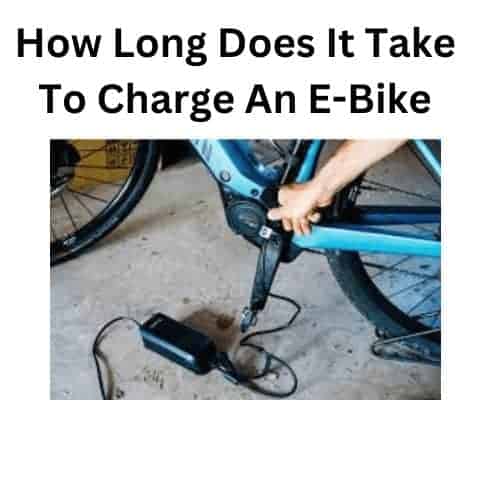
Some e-bikes have removable batteries that you can charge separately from the bike. This offers more flexibility and can be convenient for those who need to charge their e-bike at work or in public spaces.
In general, keeping the battery topped up regularly rather than letting it fully discharge can help you feel in control of your e-bike’s health and extend its lifespan.
To Charge An E-Bike
The time it takes to charge an e-bike varies with several factors, including battery capacity, charger output, and level of depletion. Typically, e-bike batteries take 3 to 6 hours to charge fully. However, some high-capacity batteries can take up to 8 hours to charge fully.
How Long Does It Take To Charge An E-Bike
The time it takes to charge an e-bike varies with several factors, including battery capacity, charger output, and level of depletion. Typically, e-bike batteries take 3 to 6 hours to charge fully.
2. Make sure to use the charger that came with your e-bike or one that is specifically designed for your battery.
3. Charge the battery in a cool, dry place, away from direct sunlight and heat sources.
4. Do not overcharge the battery, as this can damage it and reduce its lifespan.
5. Check the battery’s charge level regularly, and avoid letting it fully discharge before recharging it.
If you plan to store your e-bike for an extended period, fully charge the battery before storage, and recharge it every few months to keep it in good condition.
Correct Way to Charge an e-Bike Battery
Charging an e-bike battery correctly is essential to prolong its lifespan and ensure optimal performance.
Use the right charger.
Always use the charger the manufacturer provides. Using an incompatible charger can damage the battery or the e-bike.
Keep the battery cool
Do not charge the battery in extreme temperatures (below freezing or above 40°C). Charging the battery in high temperatures can reduce its lifespan.
Charge the battery before it’s fully drained
It’s recommended to charge the battery before it’s completely drained. Regularly charging the battery after every ride will help prolong its lifespan.
Don’t overcharge
Most e-bike batteries come with a built-in protection circuit that prevents overcharging. However, unplug the charger once the battery is fully charged.
Charge in a well-ventilated area
Charge the battery in a well-ventilated area to prevent overheating.
Store the battery properly
If you’re not using the e-bike for an extended period, store the battery in a cool, dry place at a charge level between 40% and 60%.
Tips For Efficient Charging
Use the right charger
Always use a charger designed specifically for your device. Using the wrong charger can slow charging or damage your device.
Avoid extreme temperatures
Charging your device in extreme temperatures, whether too hot or too cold, can slow down charging times and reduce battery life.
Keep your device’s battery level between 20% and 80%
Keep your device’s battery level between 20% and 80% for optimal battery health. Avoid letting your battery level drop too low or charging it to 100% too often, as this can degrade your battery over time.
Charge your device before it’s completely drained
It’s better to charge your device before it’s completely drained. This will help maintain battery health and prevent damage.
Turn off unnecessary features
Turn off unnecessary features like Wi-Fi, Bluetooth, and GPS when you’re not using them. These features can drain your battery quickly and slow down charging.
Use airplane mode
If you need to charge your device quickly, turn on airplane mode. This turns off all wireless connections and reduces battery usage, allowing your device to charge faster.
Use a wall charger
Charging your device using a wall charger is faster than using a USB port on your computer. If you’re in a hurry, use a wall charger.
Keep your device cool
Heat can slow down charging times and reduce battery life. Keep your device cool while it’s charging.
Use a quality charging cable
A low-quality charging cable can slow charging and damage your device. Invest in a quality charging cable to ensure efficient charging.
Charge your device overnight
If you don’t need your device while you’re sleeping, charge it overnight. This ensures your device is fully charged in the morning and ready to go.
Electric Bike Charging Costs
The cost of charging an electric bike depends on several factors, including your local electricity rate, your bike’s battery capacity, and your charger’s efficiency.
Assuming an average battery capacity of 400 watt-hours and an electricity cost of 13 cents per kWh, the cost of fully charging an electric bike would be around 5 cents (0.4 kWh x $0.13 per kWh = $0.052).
However, if your electric bike charger is less efficient, it may draw more electricity from the grid to charge your battery, increasing your charging costs. Additionally, if you frequently charge your bike’s battery at a public charging station, you may have to pay to use it.
Charging an electric bike costs relatively little compared to fueling a traditional gasoline-powered vehicle. Additionally, electric bikes can be charged using renewable energy sources, such as solar panels or wind turbines, further reducing their environmental impact and operating costs.
How Many Charges Can I Get Out of A Battery?
The number of charges you can get from a battery depends on several factors, including the battery type, capacity, the device you use it with, and how you use and maintain it.
Most batteries have a specified number of charge cycles, which is the number of times a battery can be fully charged and discharged before it starts to degrade. For example, a lithium-ion battery typically lasts around 300 to 500 charge cycles.
In addition, the battery capacity and the power requirements of the device you are using it with will also affect how long the battery lasts. A higher-capacity battery will generally last longer, but it will also take longer to charge.
Other factors that can affect how many charges you get from a battery include how you use and maintain it. For example, consistently draining the battery to 0% before recharging can shorten its lifespan.
How Much Electricity Does It Take To Charge A Battery?
The amount of electricity required to charge a battery depends on several factors, including the battery’s capacity, charging rate, charging efficiency, and battery chemistry.
In general, to calculate the amount of electricity required to charge a battery, you can use the following formula:
Energy (Wh) = Voltage (V) x Capacity (Ah)
Where Wh stands for Watt-hour, V stands for Voltage, and Ah stands for Amp-hour. This formula gives you the total energy needed to charge the battery fully.
For example, if you have a 12-volt, 100Ah battery, the amount of energy required to charge it fully is:
Energy (Wh) = 12V x 100Ah = 1,200 Wh
When to Charge Your Electric Bike Battery
Charging timing depends on the battery type and how often you use it. Here are some general guidelines:
Lithium-ion batteries, which are commonly used in electric bikes, can be charged at any time, regardless of their current charge level. You don’t have to wait for the battery to completely discharge before charging it.
It’s best to charge your electric bike battery after each use. This keeps the battery ready for your next ride.
If you’re not planning to use your electric bike for an extended period (more than a month), store the battery at around 50% charge. This helps prolong the battery’s overall lifespan.
Avoid leaving your electric bike battery in extreme temperatures (hot or cold), as this can damage the battery and reduce its performance.
Factors Impacting Electric Bike Battery Range
Several factors can impact the range of an electric bike battery, including:
Battery Capacity: The battery’s capacity is the primary factor determining an electric bike’s range. Higher-capacity batteries will generally provide a longer range.
Motor Power: The motor’s power also significantly affects the electric bike’s battery range. A more powerful motor will drain the battery faster, resulting in a shorter range.
Terrain: The type of terrain you ride on can significantly affect battery range. Riding uphill or on rough terrain requires more power from the motor, which drains the battery faster.
Rider Weight: A rider’s weight can also affect battery range. Heavier riders require more power to move, which can drain the battery faster.
Wind Resistance: Riding against the wind can also affect battery range. The more wind resistance, the more power the motor needs to provide, which drains the battery faster.
Speed: Riding at higher speeds requires more power from the motor, which will drain the battery faster.
Temperature: Extreme temperatures can affect battery performance. Cold temperatures can reduce battery capacity, while hot temperatures can cause overheating and reduce lifespan.
Riding Mode: Different riding modes, such as pedal-assist or throttle-only, can affect battery range. Pedal-assist modes generally provide a longer range than throttle-only modes.
Different Voltage E-bike Battery Charging Time
An e-bike battery’s charging time depends on several factors, including the battery’s capacity, the charger’s output voltage and current, and the battery’s current charge level. Generally, the higher the charger’s voltage and current output, the faster the battery charges.
1. 24V battery: Charging time may take around 4-6 hours
2. 36V battery: Charging time may take around 5-7 hours
3. 48V battery: Charging time may take around 6-8 hours
4. 52V battery: Charging time may take around 7-9 hours
How Long Does it take to Charge Your Bike for The First Time?
The time it takes to charge your bike for the first time depends on several factors, including the battery capacity, the charger you use, and the battery’s initial charge level.
In general, most e-bikes take between 3 and 6 hours to fully charge, though some may take longer. However, follow the manufacturer’s instructions for the initial charge time for your specific bike.
(FAQs)
Q: How long does it take to charge an e-bike battery?
A: The charging time for an e-bike battery can vary depending on the battery’s capacity, the charger’s output, and the state of charge of the battery. Typically, it takes 2 to 8 hours to fully charge an e-bike battery, with most models taking around 3 to 4 hours.
Q: Can I overcharge my e-bike battery?
A: It is not recommended to overcharge an e-bike battery, as this can cause damage to the battery and reduce its lifespan. Most e-bike chargers automatically stop charging when the battery is fully charged, but you should still follow the manufacturer’s guidelines for proper charging.
Q: How often should I charge my e-bike battery?
A: The frequency with which you should charge your e-bike battery depends on how often you use your e-bike and how much power you use during each ride. In general, charge your e-bike battery after each use to ensure it is fully charged and ready for the next ride.
Q: Can I ride my e-bike while it’s charging?
A: It is not recommended to ride your e-bike while it is charging, as this can cause damage to the battery and charger. Additionally, some e-bike models may not allow you to ride while the battery is charging for safety reasons.
Q: Can I use any charger to charge my e-bike battery?
A: It is important to use the charger that was specifically designed for your e-bike model, as using the wrong charger can cause damage to the battery and reduce its lifespan. If you need a replacement charger, buy one compatible with your e-bike’s battery voltage.
Conclusion
E-bike charging time varies with the battery’s capacity, the charger’s output, and the battery’s state of charge.
Charging your e-bike battery after each use is generally recommended to ensure it is fully charged and ready for the next ride. Don’t overcharge it or ride your e-bike while it is charging.
#EBikeLife #ChargeItUp #BikeCharging #EbikeAdventures #PedalPower #EcoFriendlyRide #ElectricBikeLove #ChargeTime #RideAndCharge #BikeTech #SustainableTravel #EbikeJourney #GreenTransport #BatteryLife #CyclingCommunity #UrbanCyclist #EbikeFun #QuickCharge #ElectricRide #BikeLife #EcoWarrior #TwoWheeledJoy #ChargeYourRide #EbikeTips #BikeSmart #RideElectric #ChargeAndGo #BikingBliss #EbikeLifestyle #PowerUpYourRide #CycleOn