Safety is a key priority for all workers in industrial and construction roles. Therefore, a hard hat is an effective solution. This protective hard fiberglass hat protects against injury from falling or flying objects.
A hard hat review is critical, and to better understand it, it is essential to be aware of several key aspects, such as the types and classes of hard hats and how to select the best one.
What are the Types and Classes of Hard Hats Available?
Although all safety hard hats are expected to provide similar protection for the user’s head against impacts, not all classes of these helmets offer the same level of shielding. ANSI has classified the hard hat reviews into various categories to help users identify the most suitable ones for their respective work environments.
It doesn’t matter whether you’re working on a construction site with falling objects, handling high-voltage electrical fields, or fighting fires; there is a hat for everyone.
Types of Hard Hats
According to ANSI, these helmets are divided into two categories, and they include:
Type 1 hard hats feature a full brim that encloses the entire hat, primarily protecting the head from impacts above the brim.
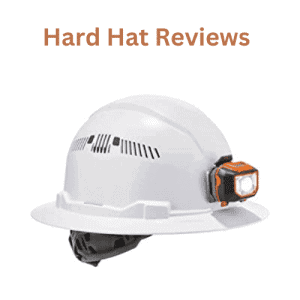
Type 2 hard hats – This design features a short brim only on the front part of the helmet and is the most common type on the market today.
Classes of Hard Hats
Three classes of hard hats were categorized by their electrical performance.
Class E – They protect the user’s head against impact and low-voltage conductors of about 2,200 volts.
Class G – They protect the wearer against effects as well as high-voltage conductors of up to 20,000 volts.
Class C – They protect the user against impact and penetration on the head alone and have no resistance against conductors.
Apart from impact, penetration, and voltage conductors, hard hats are also tested against other factors such as water absorption and flammability resistance. Flammability resistance is primarily tested on firefighters’ helmets to ensure their heads are protected when entering a burning building.
We also have a detailed review of the best construction hard hats if you’d like to take a look.
Top-Rated Hard Hat Reviews in 2026
1. Full Brim Pyramex Hard Hat by Acerpal
Head injuries from potential hazards can be a significant blow to any employer because the resulting losses are massive. If you’re looking for maximum head protection in any work environment, the Full Brim Pyramex Hard Hat, designed by Acerpal, could be the answer to all your hard hat safety needs.
These heavy-duty hard hat reviews were designed to significantly reduce injury rates and protect the workforce across every industry.
Features
1. It is a big and strong, yet ultra-lightweight, hard hat designed with a wide brim for weightless protection and a carbon fiber design that makes it a unique and special helmet. It would keep you safe and protected throughout its use.
2. Ratchet-padded suspension is straightforward to adjust, allowing the user to modify its fitting while wearing the helmet.
3. The low-profile design provides a low center of gravity for the helmet, providing better balance and a rear padded suspension.
4. Made with 4 position harness points, allowing the wearer to move the helmet on any side: forward, backward, up, and down. This provides users with greater comfort by enabling them to find the optimal head position.
5. Vented pressure pad.
6. Complies with all the standards of OSHA and other major safety organizations.
7. A 100% risk-free purchase with a 3-year money-back guarantee from the best customer service.
Pros:
1. Comes in many colors and designs
2. Easy and comfortable fitting
3. Lightweight design
Cons:
1. Product color may vary from the images viewed
2. Maybe a bit wide for your head
The Full Brim Pyramex Hard Hat is a unique safety device that sits comfortably on your head, providing adequate protection against various head injuries across diverse work environments.
2. Lift Safety DAX Hard Hat
You can never be too safe to avoid injury in work environments that present hazards. No matter how careful you think you are when handling different jobs in construction or industrial environments, accidents can occur at any time and cause unexpected injuries.
The head is one of the most sensitive parts of the body, especially when working in such places. You would need to take the utmost precautions to protect yourself, and the HDF-15NG DAX Hard Hat, designed by Lift Safety, is your first step in minimizing such risks.
Features
1. Designed with a fiber-reinforced resin shell providing maximum protection against impacts from falling or bumping into heavy objects.
2. An 8-point suspension system offers the wearer comfort and the ability to move the helmet in various directions to get the optimal fit on their head.
3. An oversized ratcheting fitment dial for adjustment of the size is straightforward to use and can be handled with gloves on.
4. The brim grip is a hard and threaded, unique design that offers users a secure and firm feel.
5. Microfiber foam liner that reduces the build-up of sweat around the head.
6. A triple-reinforced crown provides the best protection against impacts.
7. Molded EVA foam fitted in a Clarino synthetic leather comfort dome inserted for extra shock-absorbent protection to the top of the user’s head.
Pros:
1. Lightweight material
2. Very durable
3. Comfortably fitting
Cons:
1. Could be fragile
2. Leather pads hold moisture in the heat
3. Leather pads are rigid in the cold
The HDF-15NG DAX Hard Hat has proven to be an exceptional helmet, providing its users with the utmost head protection against various job-related injuries. Its sophisticated design gives it a touch of power and strength compared to standard hard hats.
How do I Choose the Right Hard Hat?
Though this unit didn’t make it to our carbon-kevlar hard hat, it still has some quality. Let’s have a look!
Choosing a hard hat may seem like an ordinary shopping adventure. In reality, it requires extra caution and thorough research to avoid selecting an inefficient option that doesn’t meet your needs.
When selecting the best helmet for employees or yourself, it is essential to consider several factors, as an incorrect choice can lead to severe or even fatal injuries.
While hard hat reviews don’t eliminate the risk of head injury, they reduce the likelihood of it.
Therefore, there are a few tips to follow to get the most out of their decisions.
Tip 1: Go for Comfort
There may be many misconceptions about comfort in hard hats. Some people claim that, as long as helmets are designed appropriately, they don’t need to be comfortable, provided they protect effectively.
However, we often overlook that if a hard hat is comfortable for the worker, it is more likely to remain on their head longer than an uncomfortable one.
While a seasoned worker who has been on the worksite for extended periods is accustomed to wearing the hard hat for prolonged periods without complaint, trainees would find it difficult to do the same. Therefore, an employer must ensure that the hard hat reviews are comfortable enough for the trainees.
These individuals pose a higher liability risk on the worksite because they are not yet accustomed to the work environment. They may not have been accustomed to the head protection gear, and once it became uncomfortable, they would spend less time wearing it than they should.
Comfort fit is one of the most essential factors when selecting hard hats that meet the necessary standards for different work applications.
Tip 2: Choose a Hard Hat that ANSI approves
You are also required to choose an ANSI-approved hard hat that complies with established safety standards. Depending on your work environment, you can choose the right hard hat to protect yourself from potential hazards.
For example, Type 1 hard hats are suitable for impacts on the top of the head. In contrast, Type 2 hard hats are ideal for protecting the user’s head against lateral impacts.
Furthermore, there are various class ratings for these hard hats. They include Classes G (general helmets), E (electrical hard hats), and C (conductive hard hats).
One should understand the various standards and apply them across diverse work environments to select the appropriate hard hat type and class for their needs.
Tip 3: Consider the Accessory Fitting
Today, there are thousands of hard hat reviews, each with unique features that set it apart. These features are accessory-ready, providing head protection while allowing the user to add extra accessories without disrupting the system’s mechanism.
For example, someone who needs hearing protection may require a hard hat that allows them to wear noise-canceling headphones while working in a boisterous environment. Others may require face protection in polluted environments, such as mines, and thus may require face masks.
Many hard hats on the market feature accessory slots that allow users to add accessories as needed. Such hard hats are ideal for any environment, as they provide enhanced protection for all wearers.
Tip 4: Lighter and Modern Materials are Better Off
Today’s hard hats are not comparable to those from a decade ago; they are lighter and made of more durable materials. Composite materials, including ABS plastics, are strong enough to meet all ANSI requirements and offer the added benefit of being lightweight and comfortable.
Lightweight hard hats are more portable and tend to stay on the wearer’s head longer because they are more comfortable than heavier models.
However, one cannot overlook the suspension under the hard hat, as it is an essential factor in hard hat safety. The suspension is the primary headgear and hero of the story because it absorbs all impact force and distributes it across the shell, thereby reducing the effect on the user’s head.
The suspensions can be designed with a pin lock or a wheel-type adjustment, allowing them to fit easily around the head’s circumference. Some hard hats also feature height-adjustable designs that allow the wearer to adjust the shell height, providing enhanced protection.
Tip 5: Your Work Environment Would Guide You
Before trying on a hard hat to ensure a proper fit or checking for included accessories, you must first identify your work environment and determine the most suitable type of hard hat for it.
Furthermore, you should be familiar with all potential hazards around you and select the most suitable hard hats that can handle these risks and provide reliable head protection. Hard hats used on construction sites differ from those worn by traffic officers on the road.
Tip 6: Look for Extra Features
With thousands of hard hat brands on the market, many are seeking to stand out by designing products with unique features that enhance user comfort and convenience.
Some manufacturers produce vented shells to help keep your head cool. In contrast, others install foam within the helmet to absorb sweat, keeping you feeling fresh throughout the day.
Others install brow pads that keep sweat from the user’s eyes, while some offer winter liners to insulate the head against heat loss in cold conditions.
Tip 7: Focus on Flexibility
Some jobs require helmets that can be worn backward due to various potential risks. Therefore, some manufacturers have made this possible by developing helmets that can be worn backward without disrupting the suspension system’s standard functionality.
Others have gone the extra mile to produce all-around hard hats that can be worn in any direction the user prefers. These hard hats are typically circular and more efficient than standard hard hats.
You should never wear an approved lift hard hat backward, as it compromises the mechanism’s efficiency and is risky.
Tip 8: Check on the Ratings
According to national standards, there are two types of recognized hard hats: Type 1 and Type 2. Therefore, you should first check Amazon customer ratings, then electrical ratings.
You need to be familiar with the possibility of coming into contact with electrical charges in your work environment and the voltage levels you’re working with. This will help you select the right hard hat with the ideal electrical ratings, as follows.
Class E hard hats are sampled against a conductor carrying a maximum of 20,000 volts
Class G hard hats can only withstand up to 2,200 volts of electrical charges and, therefore, are not suitable for extremely high voltage areas
Class C, on the other hand, has no defense mechanism against electrical charges and should, therefore, never be used in places that have electrical voltages as potential hazards
How Should I Protect My Hard Hat?
There are a few guidelines that outline the dos and don’ts of Milwaukee hard hat maintenance. Just as the hard hat protects your head from injury, you are expected to care for it to prevent it from fading quickly and becoming unusable.
Here are a few tips for caring for your hard hat to maximize its lifespan.
1. Do not Apply Stickers or Drill Holes into the Hat
It is common to find many workers in a construction site personalizing and customizing their issued hard hats. These workers usually apply a sticker of their favorite team or brand to show off their pride.
However, some workplaces restrict such modifications because even small changes can compromise the hat’s protective capabilities.
Additionally, if your hard hat is defective, for example, with cracks or a dent, it would be almost impossible to notice because the stickers could be covering up the defect.
2. Do Not Store Your Helmet in Direct Sun
It is well known that direct sunlight can damage the components of a Kool Breeze solar hard hat. Although you may spend a whole day working outdoors, for storage, it’s best to keep items out of direct sunlight.
This is because prolonged exposure to sunlight can cause hard hat reviews to fade and some components to become obsolete. This would help you prolong the lifespan of your hard hat and get the most out of it.
3. Keep the Hard Hat Clean
If your work environment gets you and your hard hat dirty, keep the helmet clean with a cloth and soapy water. However, if your job involves working with paint and other adhesives, such as paint thinners or solvents, you should always clean your hat regularly.
This is because these compounds contain harmful chemicals that can corrode the shell, making it weaker over time. Ultimately, the shell’s ability to provide optimal head protection would have been significantly reduced, increasing the user’s risk of impact-related injuries.
4. Carry out Regular Inspection
You are required to conduct a physical and visual inspection of your hard hat before and after each use to ensure it is safe for use in potentially hazardous environments. Hard hats with defects are hazardous to any user.
Inspect the device to identify any cracks, indentations, perforations, or other deformities that may not have been present when it was new.
If you ignore the inspection, you risk using defective hard hats. This can threaten your life when a hazard arises around you.
Remember, if you treat it right, the helmet will continue to provide maximum head protection all day long.
When am I Allowed to Get a New Hard Hat
Hard hats must be replaced whenever they show any signs of damage or any unusual deformities not present at the time of purchase. For this reason, regular inspections before and after each use are crucial to ensure the hard hat continues to provide optimal head protection.
While there is no specific period for replacing your Curious Composites hard hat, as it depends on the variables it is subjected to, manufacturers recommend replacing it after approximately 5 years.
Are Vented Hard Hats Better than Non-Vented Ones?
Both vented and non-vented hard hats are suitable for different conditions. When working in elevated temperatures, overheating can be hazardous to your health. Therefore, a vented hard hat with small openings can significantly improve airflow within the helmet, allowing you to stay cool.
If your work environment involves chemicals or chemical fumes, these ventilated hard hats allow adhesive compounds to penetrate the shell and reach the worker’s head. In such situations, non-vented hard hats are ideal for providing maximum head protection.
Comprehensive Guide to (FAQs)
Hard hats are not just a piece of equipment; they are a shield that protects your head from injury, electrical hazards, and other workplace risks. They are indispensable in industries such as mining, construction, and utilities.
This guide provides valuable information, focusing on the most frequently asked questions about hard hat reviews. It equips firms with the knowledge to invest in high-quality worker protection, thereby reducing the risk of workplace accidents.
Understanding Hard Hat Standards
What Are the Different Types of Hard Hats?
Hard hats fall into three categories:
Classes G (General): Protects against electrical shocks and impacts as high as 2,200 volts.
Class E (Electrical): Offers electrical protection and impact reaching 20.000 Volts.
Class C (Conductive): Offers only impact protection and is not intended for electric hazards.
What Standards Govern Hard Hat Safety?
The American National Standards Institute (ANSI) has set the benchmark for hard hats in the United States. The IS/ANSI Z89.1-2014 standard defines the testing and performance requirements for hard hats. Adherence to these standards ensures your hard hat provides the necessary protection, instilling confidence in your equipment’s safety.
Key Attributes to Look for in a Hard Hat
Material and Durability
When reviewing hard hats, be sure to examine the material used. High-density polyethylene (HDPE), fiberglass, and thermoplastic are the most common materials. Each has distinct benefits:
HDPE: The material is light and resistant to UV rays.
Fiberglass is a high-quality material resistant to temperatures up to 105°F.
Thermoplastic: A flexible material that offers outstanding impact resistance.
Suspension System
A suspension is a crucial part that guarantees safety and security. Check out reviews that focus on the specific type of suspension system, for example:
1. Ratchet suspension allows for simple adjustment.
2. Pin lock suspension offers a safe fit. However, it may require greater effort to adjust.
Comfort and Fit
The hat you wear should fit comfortably for long durations. The padding is often mentioned in reviews of airflow, adjustability, and ventilation. The comfort features significantly impact users’ safety and compliance.
Common Questions About Hard Hat
How Often Should Hard Hats Be Replaced?
The lifespan of a cap varies by fabric and intended use. However, most manufacturers recommend replacing hard hats after five years, even when they appear to be in good condition. If the hat is exposed to extreme circumstances, a replacement may be needed every two years.
Can Hard Hats Be Customized?
Most hard hats can be custom-designed with corporate logos, colors, and accessories, such as helmets, face shields, or earmuffs. Modification choices are popular in review articles because they enable companies to maintain a skilled image while ensuring safety.
What Are the Signs That a Hard Hat Needs to Be Replaced?
The signs that a hard hat needs replacement include:
1. In the shell.
2. Wear or fraying within the suspension mechanism.
3. Fading color, indicating UV degradation.
4. The loss of elasticity is evident in the straps for suspension.
Data-Driven Insights
Statistics on Hard Hat Effectiveness
According to the Occupational Safety and Health Administration (OSHA), the use of hard hats has saved countless lives and prevented many accidents. Data from the Bureau of Labor Statistics (BLS) suggests that head injuries were responsible for 9 percent of workplace injuries in the construction sector in 2020. Wearing a hard hat safely significantly reduces the risk of severe head injury, providing workplace safety and peace of mind.
Market Trends in Hard Hat Purchases
The global hard hat market was estimated at $2.1 billion in 2020. From 2021 to 2027, the market is expected to grow at a compound annual growth rate (CAGR) of 4.5%. This boost is due to growing concern for workplace safety and stricter safety rules.
Final Thoughts
Safety in the workplace is a goal that all employers and employees strive to achieve.
While there may be many hazards at a site that workers can’t fully protect against, there are a few physical measures they can take to reduce their impact. Using hard hats is one of the most crucial steps they can take.
If you are interested in checking other best hard hats, be sure to check the Best Construction Hard Hats and these other articles